24/7 Emergency Water Heater Flood Cleanup in Meridian
24/7 emergency water heater flood cleanup in Meridian and surrounding areas. IICRC-certified technicians, insurance billing accepted. Call (208) 713-3346.
A failing water heater rarely gives much warning. A slow weep from a corroded tank seam can soak a subfloor for weeks before anyone notices the soft spot near the water closet, while a full tank rupture can dump 40 to 80 gallons across a finished basement or laundry room in minutes. Either way, the water is usually hot, often carries sediment and mineral scale from the tank interior, and finds its way into wall cavities, flooring, and ductwork faster than most homeowners expect. Idaho Disaster answers calls around the clock and gets technicians moving on water heater flood cleanup before standing water turns into a structural and mold problem.
What Water Heater Flood Cleanup actually involves
Water heater failures fall into two categories: a slow leak that’s been building for days or weeks, and a sudden burst that releases the full tank volume at once. The cleanup approach differs for each. A slow leak usually means water has already migrated under flooring, behind baseboards, and into insulation, so the job starts with finding the hidden wet zones, not just the visible puddle. A burst tank means fast extraction first, because standing water left on hardwood, laminate, or drywall for more than 24 to 48 hours starts causing permanent damage and creates the humidity swing mold needs to establish.
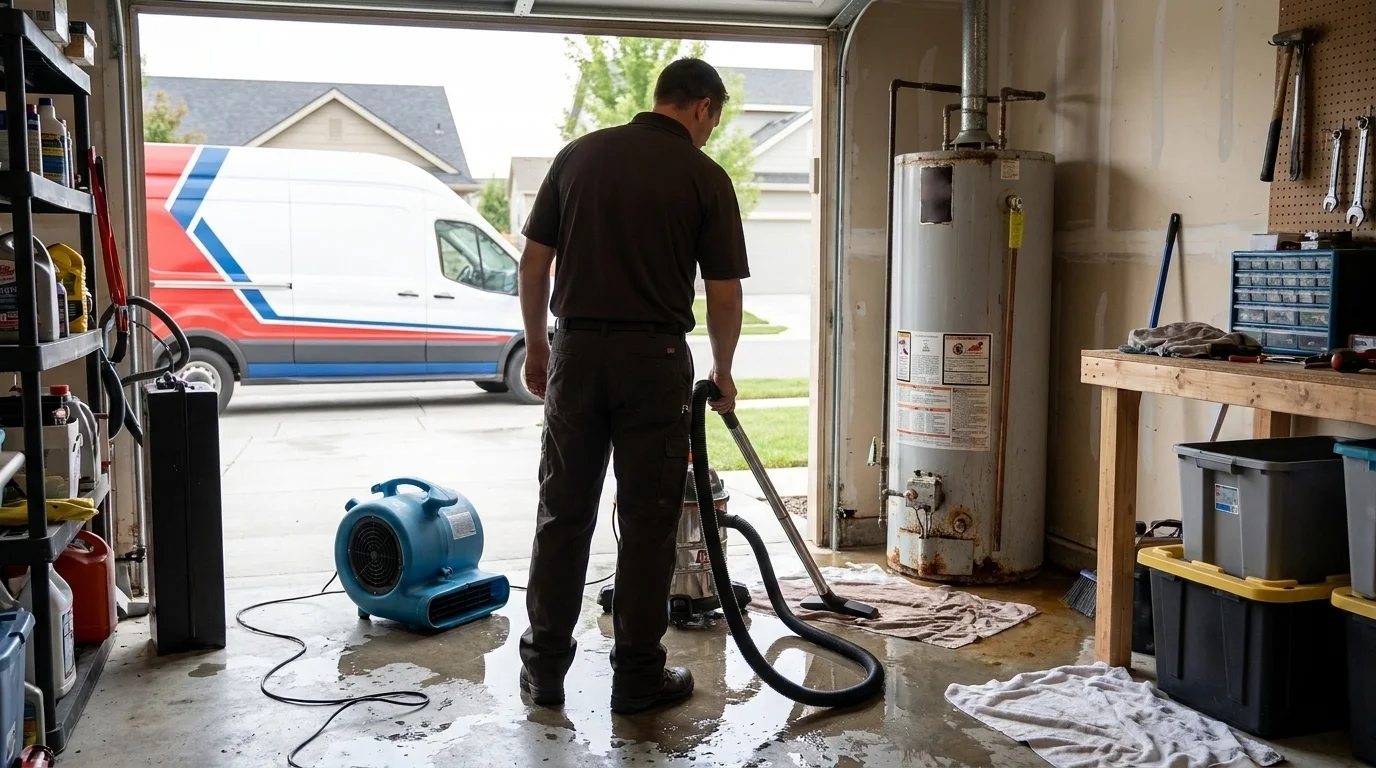
Equipment on a typical job includes submersible pumps or wet vacs for standing water, moisture meters to map how far the water traveled into subfloor and framing, and a combination of air movers and low-grain-refrigerant dehumidifiers sized to the affected square footage. Technicians also shut off and tag the water supply to the unit, since a leaking or burst water heater has to be isolated before cleanup can safely continue.
Our process
- Source confirmation and shutoff. Before anything else, we confirm the water heater is the source (not a supply line or a nearby fixture) and make sure the water supply to the tank is off.
- Extraction. Standing water comes out with pumps and extraction tools, prioritizing rooms where water is migrating toward electrical outlets, HVAC returns, or adjoining living space.
- Moisture mapping. We check subfloor, drywall, baseboards, and any closet or utility space the water heater shares a wall with, since water heaters are frequently installed in closets or tight utility rooms where leaks travel sideways before they’re visible.
- Structural drying. Air movers and dehumidifiers go in based on the moisture readings, following IICRC S500 drying guidelines, with daily monitoring until materials read dry, not just “dry to the touch.”
- Containment and material decisions. Saturated insulation, swollen baseboard, or delaminating subfloor gets flagged for removal before drying locks moisture in rather than pushing it out.
What separates a good water heater flood response from a bad one
The most common mistake is treating a water heater leak like a small spill and stopping at surface-level cleanup. Water heaters are almost always installed on a slab, in a closet, or in a utility room with a floor drain nearby, which gives homeowners false confidence that “it probably didn’t go anywhere.” In practice, water travels under the base plate, along subfloor seams, and into adjacent wall cavities well before it’s visible. An adjuster reviewing the claim will look for documented moisture readings in those adjacent areas, not just a photo of the puddle, so skipping moisture mapping is the fastest way to leave hidden damage unaddressed and the claim underdocumented.
Another frequent issue is drying the floor and ignoring the insulation or vapor barrier underneath. Fiberglass insulation that’s absorbed water loses R-value and stays wet far longer than the surrounding wood, which means a room can test “dry” at the surface while the cavity underneath stays a mold risk for weeks. Good practice is removing saturated insulation rather than trying to dry it in place.
What does Water Heater Flood Cleanup cost?
Every loss is different, which is why Idaho Disaster provides a written scope of work before any cleanup or drying begins. Typical industry costs vary based on how much water escaped, how long it sat, and whether it reached finished flooring or framing.
| Scenario | Typical range |
|---|---|
| Small leak, caught early, utility closet only | $400 - $1,200 |
| Leak that soaked adjacent subfloor and baseboard | $1,500 - $3,500 |
| Burst tank, standing water across basement or laundry room | $2,500 - $6,000 |
| Water reached finished flooring and drywall in multiple rooms | $4,000 - $9,000 |
| Extended saturation requiring insulation and subfloor replacement | $6,000 and up |
Homeowners insurance typically covers sudden water heater failures (like a tank rupture) under standard dwelling policies, though coverage for the water heater unit itself and for damage from a slow, long-term leak can vary by policy, so it’s worth confirming details with your carrier.
Seasonal & regional considerations
In Meridian and the surrounding Treasure Valley, hard water and mineral buildup accelerate tank corrosion, which means water heater failures tend to cluster around units nearing the end of their service life rather than any single season. Homes with water heaters in finished basements, which is common in older Treasure Valley construction, tend to see more extensive flooring and drywall damage simply because there’s more finished material in the path of the water.
Service area
Idaho Disaster responds to water heater flood cleanup calls throughout Meridian, Boise, Nampa, Caldwell, Eagle, Kuna, Star, Garden City, and Middleton.
If a water heater is leaking or has already failed, call (208) 713-3346 to get extraction and drying started before the water spreads any further.
Frequently Asked Questions
Does homeowners insurance cover water heater flood cleanup?
How do I know if my water heater leak has already spread under the flooring?
Should I turn off the water heater myself before help arrives?
Can a water heater leak cause mold if it's cleaned up quickly?
Do I need to replace flooring after a water heater leak, or can it be dried in place?
Looking for the best water heater flood cleanup company in Meridian?
Idaho Disaster provides water heater flood cleanup in Meridian, ID and the surrounding area, and has served local property owners since 2026. We answer calls 24/7 — call (208) 713-3346 for immediate help.
Need Water Heater Flood Cleanup now?
We respond 24/7 across Meridian and surrounding ID cities.